
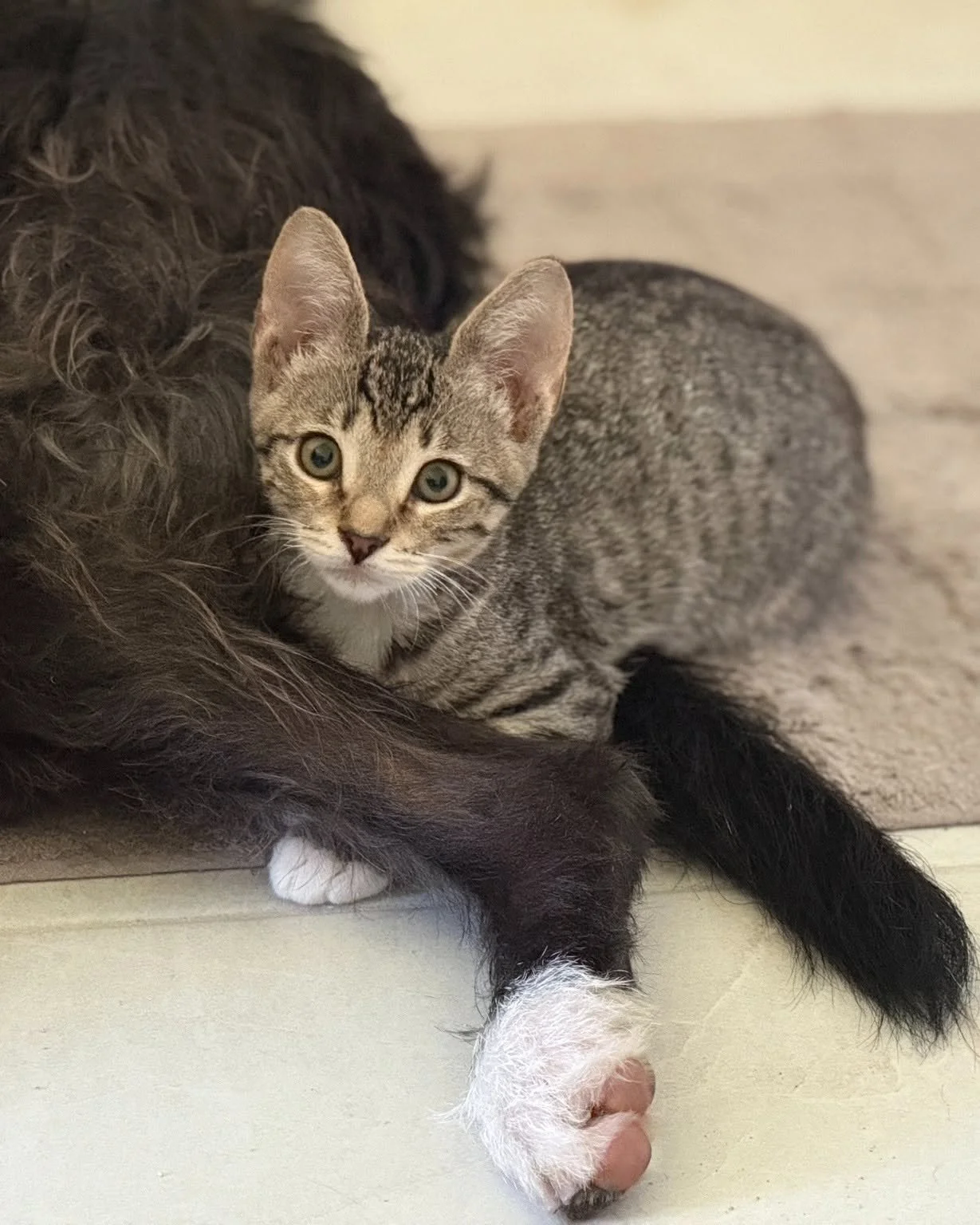
How to Introduce a New Cat to Your Resident Cat
There’s nothing quite like bringing home a newly adopted cat. Whether they’re a confident social butterfly or a shy little wallflower, every cat deserves the chance to settle into their new home at their own pace—especially when resident pets are involved.
One of the most common questions we get from adopters is: “How do I help my new cat get along with my current pets?” And while we wish there was a magic timeline or one-size-fits-all answer, the truth is this: successful cat introductions take time.
Sometimes it only takes a few days. Sometimes it can take a few weeks. Occasionally, it can take longer. The good news? Slow, thoughtful introductions are almost always worth the effort in the long run.
If you’re wondering how to introduce a new cat to your resident cat—or how to help a newly adopted cat adjust to dogs or other pets—here are some of our favorite tips and tricks to help set everyone up for success.
1. Start With Separation
When your new cat first comes home, they should begin in their own safe, quiet room away from resident pets. Think of this as their “decompression zone”—a space where they can eat, rest, use the litter box, and start to feel secure. A guest bedroom or bathroom can be perfect for this.
This may seem mean or unnecessary, but it’s actually one of the best ways to reduce stress and prevent your newly adopted cat and your resident animals from becoming overwhelmed too quickly.
During this stage, focus on helping your new cat feel safe and confident before expecting social interactions. Give them time to adjust to the new sights, sounds, smells, people, and routines in their new home.
Remember: a successful cat introduction doesn’t begin with face-to-face contact. It begins with helping everyone feel safe.
2. Read the Room—and the Body Language!
Your pets will tell you how they’re feeling—if you know what to look for.
Learning basic cat body language can help you understand when your pets are comfortable and when they need more time.
Signs your cats may be getting more comfortable:
Relaxed body posture
Curious sniffing
Calm observation of each other
Playing, grooming, or eating near a barrier without reacting
Signs they need more time:
Growling
Hissing
Swatting
Tail flicking
Puffing up or fluffed fur
Intense staring
Stalking behaviors
If you’re seeing stress signals, don’t panic! It simply means it’s time to slow things down. Rushing cat introductions usually backfires, while patience helps build trust.
A hiss or growl isn’t necessarily a sign that your cats will never get along. It’s communication—and it’s important to listen.
3. Use Barriers to Build Positive Associations
One of our favorite strategies for introducing cats is helping them get comfortable around each other before they have full access to one another.
Baby gates with mesh, screen doors, or portable cat pens (like this one) can work wonderfully during this stage. Barriers allow everyone to safely see and smell one another while still maintaining personal space.
Portable cat enclosures can be especially helpful for cautious cats or households with limited space.
The goal here isn’t forced interaction—it’s calm coexistence.
Let your pets observe one another from a comfortable distance. If everyone remains relaxed, you can gradually increase the amount of interaction over time.
4. Make Good Things Happen Around Each Other
Want to help your cats build positive associations with one another? Pair their interactions with something they already love.
Some ideas include:
Feed meals on opposite sides of a mesh barrier
Offer treats while they calmly observe one another
Break out the Churu tubes during “sight sessions”
Use feather wand toys to redirect nervous energy into play
Sometimes play can completely change the emotional tone of an interaction.
If your new cat seems nervous, try engaging them in play while your resident cat watches from the other side of the barrier. If your resident cat is the more hesitant one, reverse the setup!
The idea is simple: new cat + resident pet = good things happen.
Over time, those positive experiences can help replace uncertainty with familiarity.
5. Don’t Forget About Space Swaps
Another great trick when introducing a new cat is letting each cat explore the other’s scent without direct interaction.
You can do this by rotating who has access to certain areas of the house. For example:
Resident cat relaxes in the bedroom
New cat explores the living room
Then swap spaces a little while later
This helps normalize each cat’s smell and presence in a low-pressure way.
You can also introduce their scents by swapping bedding, blankets, or toys between spaces. The goal is to let each animal become familiar with the other’s scent before asking them to share physical space.
Progress Isn’t Always Linear
This part is important: some days will feel like huge wins. Other days may feel like setbacks. That’s normal!
A hiss doesn’t mean failure. A growl doesn’t mean they’ll never get along. Building relationships takes time, communication, and patience—especially for animals who didn’t choose each other themselves.
If tensions rise, simply return to the previous successful step for a few more days before trying again. You may need to slow down, increase the distance between the animals, or spend more time creating positive associations before moving forward.
The goal is to help everyone feel safe, respected, and comfortable in the home they now share.
The biggest thing we encourage adopters to remember? Go at the pace of the animals, not the pace you wish they were moving.
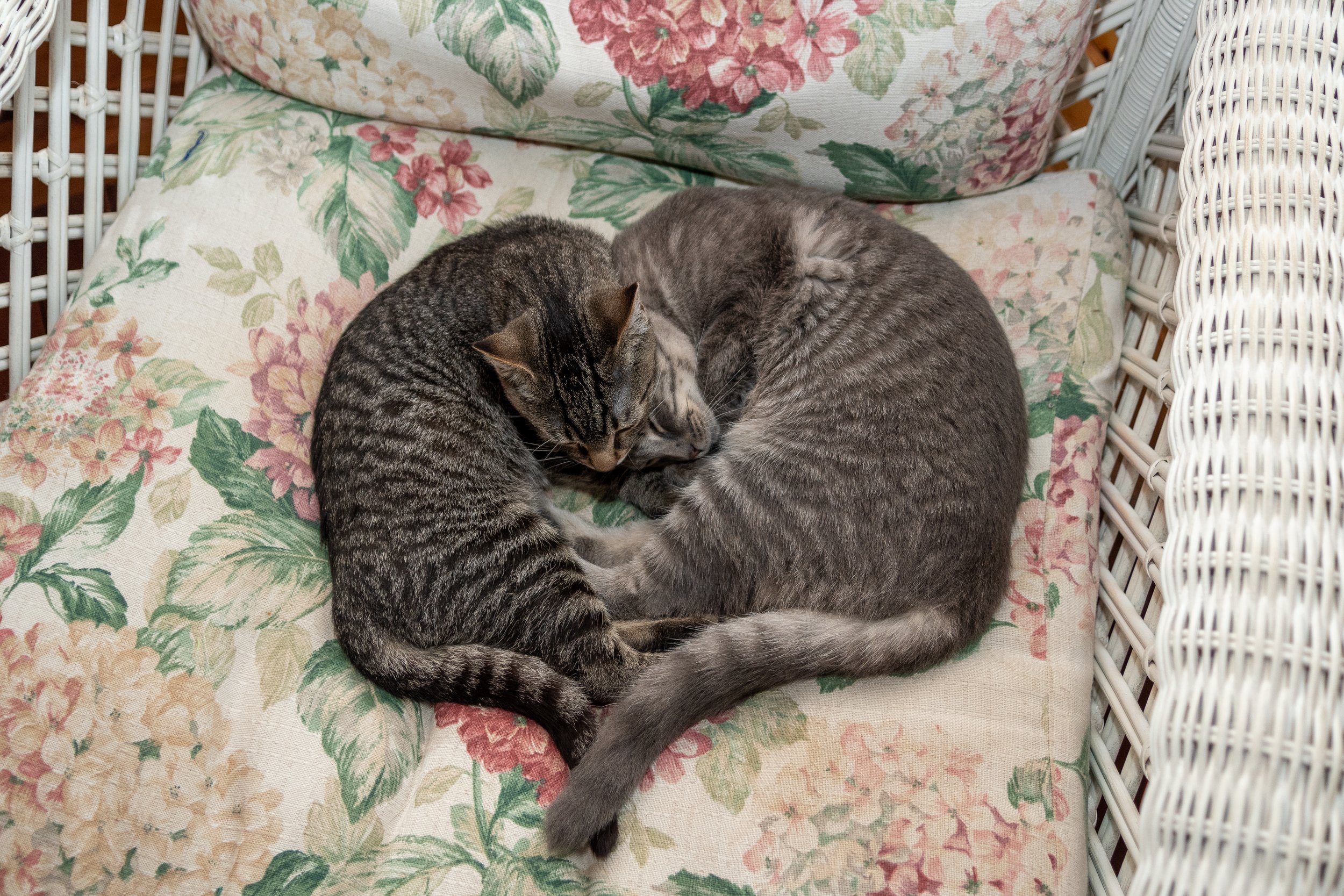
And trust us—watching former strangers eventually nap together in a sunny window is absolutely worth the extra patience!
When to Get Extra Help
Sometimes, despite your best efforts, cat introductions can be challenging. If you’re seeing persistent aggression, repeated fights, significant stress, or behavior that concerns you, don’t be afraid to ask for help from your veterinarian or a qualified animal behavior professional.
Need extra support? Our team is always happy to help our adopters troubleshoot introductions! Every animal is different, and sometimes small adjustments can make a huge difference.
Thank you for giving a rescue cat the chance to settle into a loving home—even when the process requires a little extra time, patience, and Churu.
“
Go at the pace of the animals, not the pace you wish they were moving.